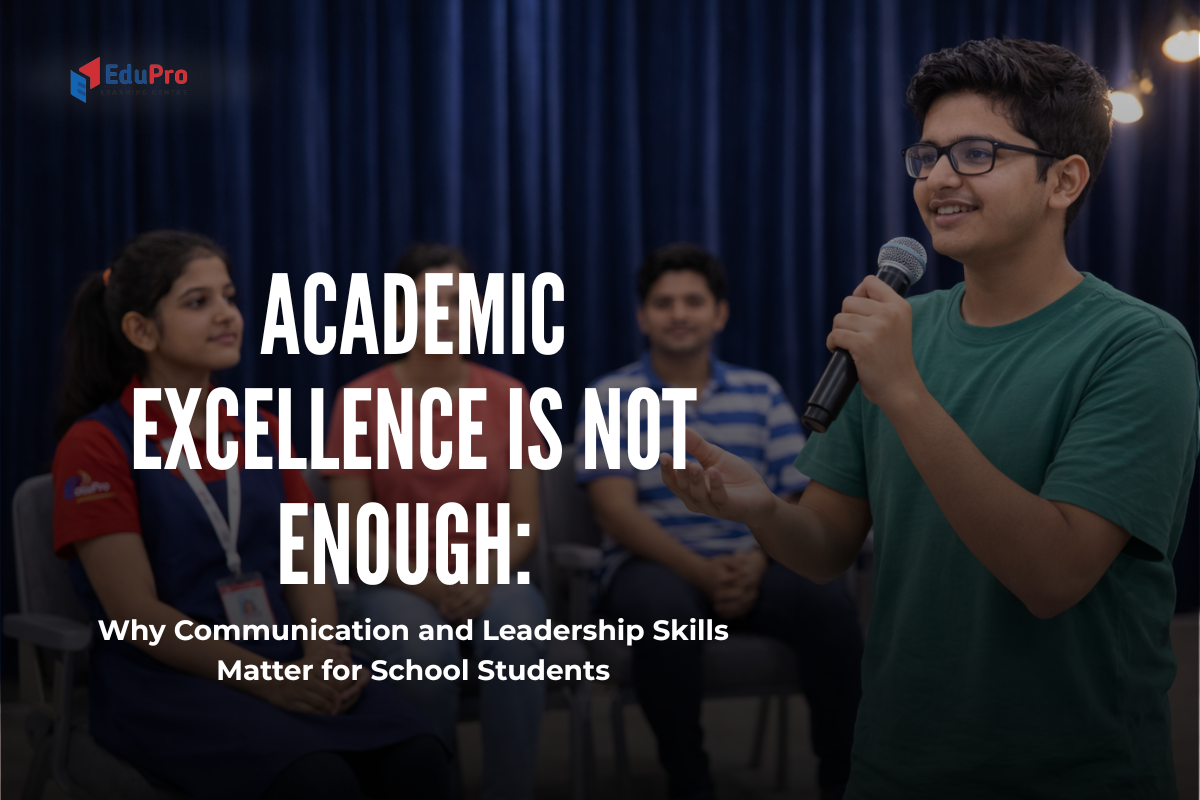
Academic Excellence Is Not Enough: Why Communication & Leadership Skills Matter for School Students
- by EduPro Skill Development Team
- 15 Feb 2026
Strong academic results are important, but communication and leadership skills are equally essential for student success. Learn why balanced development matters for school students today.
Academic Excellence Is Not Enough: Why Communication and Leadership Skills Matter for School Students
For many families, academic performance is the primary measure of success in school. High marks, strong grades, and examination results are often seen as the most important goals.
While academic excellence is important, it is no longer enough.
In today’s world, students need more than subject knowledge. They need confidence, communication ability, and leadership skills to succeed in higher education and future careers.
Let us understand why.
The changing definition of student success
In the past, academic marks were often the only benchmark for achievement. Today, schools and universities look for well-rounded students.
Beyond grades, they value:
● Clear communication
● Confidence in presentations
● Teamwork and collaboration
● Leadership initiative
● Critical thinking
● Ability to express ideas clearly
A student who scores well but struggles to speak confidently may find it difficult in interviews, group discussions, and public platforms.
Why communication skills matter early
Communication is not just about speaking English fluently. It includes:
● Expressing ideas clearly
● Listening carefully
● Asking thoughtful questions
● Presenting confidently
● Participating actively in class
Students who develop communication skills early tend to:
● Participate more in classroom discussions
● Understand concepts better through interaction
● Build stronger relationships with teachers and peers
● Develop higher self-confidence
Confidence in communication directly supports academic growth.
The role of leadership skills in school years
Leadership does not mean becoming a school captain. It means:
● Taking responsibility
● Working effectively in teams
● Making decisions calmly
● Speaking up when necessary
● Handling disagreements respectfully
Students who develop leadership skills during school are better prepared for:
● Group projects
● Competitive examinations
● College interviews
● Professional environments
Leadership training helps students build maturity and structured thinking.
Academic strength without confidence can limit growth
Some students perform well in written examinations but hesitate to:
● Speak on stage
● Present projects
● Participate in debates
● Lead group discussions
Over time, this hesitation can reduce opportunities. Strong communication and leadership skills ensure that academic ability is seen, heard, and valued.
How schools and parents can support balanced development
Balanced development requires attention to both academics and personality growth. Parents and schools can encourage:
● Public speaking opportunities
● Structured debate programs
● Communication training sessions
● Leadership workshops
● Group learning activities
These experiences help students practice expressing ideas in a safe and supportive environment.
Real-world impact of soft skills
When students enter higher education or professional settings, they are expected to:
● Present ideas clearly
● Collaborate in teams
● Handle interviews confidently
● Participate in structured discussions
Students who build these skills during school years adapt more easily to these expectations. Confidence reduces anxiety. Structured communication improves clarity. Leadership training builds responsibility.
Building these skills without pressure
Skill development should not feel forced or overwhelming. The right approach includes:
● Age-appropriate training
● Gradual exposure to stage speaking
● Supportive feedback
● Encouragement instead of comparison
● Safe learning environments
When students feel supported, they naturally grow in confidence.
Final thoughts
Academic excellence remains important. Strong subject knowledge forms the foundation of success.
However, knowledge alone is not enough. Communication skills allow students to express what they know. Leadership skills help them apply what they know. Confidence ensures they are ready for real-world challenges.
The most successful students are not only academically strong — they are confident, expressive, and responsible individuals. Balanced development today creates capable leaders tomorrow.
Trending Posts
-
Top 5 Tips to Choose the Best Tuition Cent... 24 Jul 2026
-
 When Should Students Start Preparing for N...
26 Feb 2026
When Should Students Start Preparing for N...
26 Feb 2026
-
 How EduPro Builds Quality Assurance in Dai...
25 Feb 2026
How EduPro Builds Quality Assurance in Dai...
25 Feb 2026
-
-